Cute Rubber Duck Print SVG: A Designer’s Review
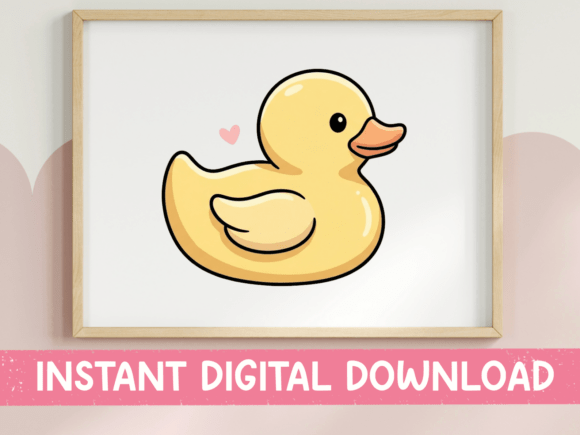
As a designer who spends more time staring at stitch simulations than actual fabric, I have learned to be skeptical of cute. Cuteness in digital graphics often translates poorly to thread. Lines that look crisp on a screen can become muddy blobs once the needle hits the cloth. So, when I pulled up the Cute Rubber Duck Print SVG for a recent client project, my initial reaction was cautious optimism. The preview showed a classic yellow rubber duck in profile, featuring a soft orange bill, a single black eye, and a tiny pink heart floating above its head. It promised warm buttery yellows, blush cheeks, and a hand-drawn black outline. But does it hold up under the pressure of a real embroidery hoop?
First Impressions: Simplicity Meets Charm
The first thing that strikes you about this design is its restraint. In a market flooded with overly complex T-Shirt Designs and cluttered Graphics, this duck relies on strong silhouettes and minimal detail. For an embroidery professional, this is a relief. Complex gradients and microscopic details are the enemies of clean stitching. This design understands that embroidery is a textural medium, not a photographic one.
The mood is undeniably cheerful and nostalgic. It evokes bath time, childhood innocence, and simple joys. Visually, the layout is balanced. The duck sits firmly, providing a stable base for stitching, while the floating heart adds a vertical element that prevents the design from feeling too static. The hand-drawn black outline is a smart choice; it defines the shape clearly against various fabric backgrounds, ensuring the duck doesn’t blend into lighter materials.
Real-World Application: The Tote Bag Test
To truly evaluate a machine embroidery design, you have to imagine it on a product. I recently used a similar concept for a custom order of canvas tote bags for a local boutique. While I did not use this exact file, the principles apply directly to the Cute Rubber Duck Print SVG. Imagine this duck stitched onto a natural cotton tote. The buttery yellow thread would pop beautifully against the neutral beige canvas.
For Etsy sellers and small shop product creators, this versatility is key. This isn’t just a baby item. Yes, it works perfectly for baby embroidery on onesies or burp cloths, but it also fits seamlessly into adult casual wear. Picture it on the pocket of a denim jacket or as a small accent on a linen apron. The simplicity allows it to cross demographic lines. It is playful without being childish, which expands your potential customer base significantly.
Performance on Different Fabrics
When dealing with thread colors like warm yellow and soft orange, fabric choice matters. On white or light pastels, the design shines. However, on dark fabrics, the effectiveness depends entirely on how the file is constructed. If this embroidery file includes a proper underlay or if you plan to use it as an applique design, it will work on navy or black sweatshirts. Without an applique layer, stitching bright yellow directly onto dark fabric requires high stitch density to prevent the background from showing through, which can lead to puckering.
For sweatshirt embroidery, the texture of the fleece can swallow small details. Fortunately, the single black eye and the orange bill are large enough to remain distinct. The running stitch or satin stitch used for the outline needs to be thick enough to stand out against the fuzzy surface. I recommend testing the design on scrap fabric first, especially if you are working with textured materials like terry cloth or waffle knit.
Technical Considerations for Clean Stitching
Let’s talk about the mechanics. The tiny pink heart is the most delicate part of this design. In embroidery, small isolated elements can be tricky. If the stitch density is too low, the heart might look sparse. If it is too high, it becomes a hard, plastic-like patch that feels uncomfortable against the skin. As a reviewer, I advise checking the stitch count and density settings in your software before loading it onto your machine.
The hoop size required for this design is likely small, perhaps 4x4 inches or smaller. This makes it ideal for caps and hats, but curved surfaces present their own challenges. Stitching on a cap requires careful hooping and the right stabilizer to prevent distortion. The duck’s rounded body should stitch out smoothly, but ensure your stabilizer is cut close to the design edges to avoid bulk inside the hat.
Another critical factor is the black outline. Hand-drawn styles often use variable line widths. In embroidery, this translates to varying satin stitch widths. Ensure your machine can handle these transitions smoothly. If the outline breaks or jumps excessively, it ruins the hand-drawn aesthetic. A clean finished product relies on smooth travel stitches between color changes.
Commercial Viability and Branding
For craft business owners, consistency is currency. This design offers a cohesive look that can be part of a larger collection. Imagine pairing this duck with other bathroom-themed or animal-themed design assets. It creates a recognizable brand identity. Customers trust designs that look professional and well-executed. A muddy, poorly digitized image erodes that trust instantly.
The Cute Rubber Duck Print SVG also lends itself well to printable mockup creation. Before you stitch a single thread, you can visualize the design on various products digitally. This saves time and material costs. Use these mockups in your Etsy listings or social media posts to gauge interest. The visual appeal of the buttery yellows and blush cheeks translates well to digital screens, helping to drive engagement.
Where to Use Caution
- Stretchy Fabrics: Avoid stitching this directly onto thin, stretchy knits without a cut-away stabilizer. The weight of the fill stitches can distort the fabric.
- Tiny Details: If you scale the design down too much, the pink heart and black eye may merge or disappear. Respect the minimum size recommendations.
- Frequent Washing: Items like kitchen towels or baby clothes undergo rigorous washing. Ensure your thread quality is high and your backing is secure to maintain the handmade product integrity over time.
Final Verdict: A Solid Addition to Your Library
After evaluating the visual structure and considering the practical limitations of embroidery, I find the Cute Rubber Duck Print SVG to be a strong candidate for various projects. It balances aesthetic charm with technical feasibility. It is not overly ambitious, which is its greatest strength. It knows what it is: a simple, happy icon.
For commercial embroidery projects, it offers quick stitch times and high visual impact. For hobbyists, it provides a satisfying result without requiring advanced troubleshooting skills. Whether you are creating a personalized gift for a new parent or stocking your online store with custom apparel, this design delivers.
Remember, the digital file is only half the battle. The final look depends on your thread tension, stabilizer choice, and fabric selection. Always run a test stitch. Check the color contrast. Inspect the small details. When done correctly, this duck will not just sit on the fabric; it will bring a smile to anyone who sees it. That is the ultimate goal of any embroidery project: to connect emotionally through craft. This design achieves that connection with simplicity and grace.
Before purchasing or using any digital embroidery file, always confirm the licensing terms. Ensure you have the rights to use it for commercial embroidery if you plan to sell finished items. Once cleared, this duck is ready to swim into your next creative venture.