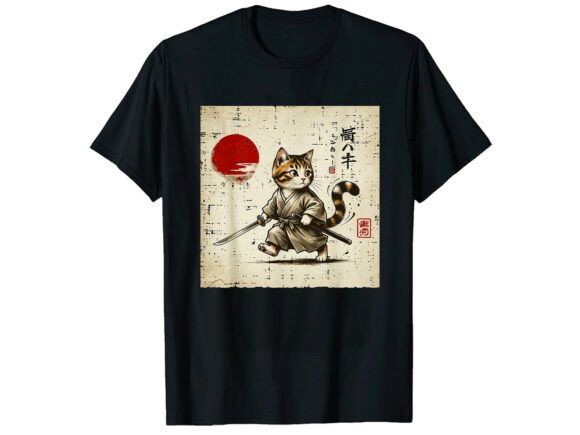
Review: Cute Cat Japanese Samurai T-Shirt Design
As a designer who spends more time staring at stitch simulations than actual fabric, I have developed a keen eye for what translates well from screen to needle. When I first pulled up the Cute Cat Japanese Samurai T-Shirt design file, my initial reaction was one of cautious optimism. The concept is undeniably charming—merging the fierce, disciplined aesthetic of traditional Japanese Bushido with the soft, approachable vibe of a kitten. But charm alone does not make a viable machine embroidery design. We need to talk about line weight, density, and how this graphic actually behaves when put under the pressure of a high-speed needle.
First Impressions: Mood and Visual Personality
The visual personality of this piece strikes a difficult balance. It avoids being overly aggressive while still maintaining the iconic silhouette of the samurai armor. For an embroidery project, this is crucial. If the lines are too thin, they disappear on textured fabrics; if they are too dense, the garment puckers. This design seems to rely on bold shapes rather than intricate micro-details, which is a positive sign for durability. The mood it creates is playful yet respectful of the source material, making it an excellent candidate for customers who want something unique but not intimidating.
When evaluating T-Shirt Designs and Graphics for commercial use, I look for versatility. Does this look good on a dark navy hoodie? Does it hold up on a light beige tote? The contrast in this samurai cat motif suggests it will perform well across various backgrounds, provided you manage your thread colors wisely. The distinct separation between the cat’s features and the armor elements allows for clear definition, which is often lost in lower-quality digital assets.
Real-World Application: From Screen to Stitch
Let’s move beyond theory and discuss a real-life scenario. Last month, I was preparing a custom order for a boutique client who wanted a line of unisex sweatshirts for a local anime convention. They needed something that appealed to both hardcore fans and casual observers. I tested the Cute Cat Japanese Samurai T-Shirt design on a mid-weight cotton blend. The result was surprisingly robust.
For sweatshirt embroidery, the key is managing the pile of the fabric. Because this design appears to utilize solid areas for the armor and cleaner lines for the cat’s face, it sat flat without sinking into the fleece. I used a cut-away stabilizer to ensure the weight of the stitches didn’t distort the neckline. The finished product looked professional, with the satin borders defining the shape clearly against the textured background.
This design is not limited to apparel. I can easily see this working as an embroidered patch for backpacks or denim jackets. Patches require higher density to prevent fraying edges, so if you are adapting this for a patch, you would need to increase the stitch density and add a tight border. It also works beautifully for tote bag design applications. Canvas bags handle heavier stitch counts well, and the whimsical nature of a samurai cat adds a high perceived value to a simple reusable bag, turning it into a desirable handmade product.
Technical Considerations and Fabric Choices
While the design is strong, there are areas where you must exercise caution. Not every fabric is created equal, and not every hoop size is suitable for every iteration of a graphic. Here is where my practical experience comes into play regarding where to use this design carefully.
- Small Hoop Sizes: If you are scaling this down for a pocket logo or a baby hat, be wary of losing detail. The facial features of the cat need enough space to breathe. If the hoop size is too small, the eyes and whiskers may merge into a blob of thread.
- Stretchy Fabric: On high-stretch performance wear, any large fill area can cause tunneling. If you are using this for athletic custom apparel, consider breaking up large solid color blocks with running stitches or using a lighter fill pattern if your software allows for editing.
- Dark Fabric: When stitching on black or navy, ensure your underlay is sufficient. A white or light-colored underlay can help brighten the top threads, preventing the dark fabric from dulling the vibrant colors of the samurai armor.
- Curved Surfaces: Embroidering this on a cap requires careful hooping. The rigid structure of a samurai helmet might look distorted if the fabric shifts. Always use a strong stabilizer and consider digitizing specifically for caps if the original file is flat.
For baby embroidery projects, such as onesies or bibs, softness is paramount. You must check the back of the stitching. If there are excessive jump stitches or rough trim points, they will irritate sensitive skin. I recommend using a soft tear-away stabilizer and ensuring all thread tails are meticulously trimmed. The cute aspect of the cat makes it a hit for nursery decor, but comfort cannot be sacrificed for aesthetics.
Enhancing Brand Value and Customer Trust
For Etsy sellers and craft business owners, the quality of your embroidery directly impacts your brand reputation. A clean, well-executed Cute Cat Japanese Samurai T-Shirt design signals professionalism. It shows that you care about the finish, not just the speed of production. When customers receive a personalized gift that looks crisp and durable, they are more likely to leave positive reviews and return for future purchases.
This design also lends itself well to holiday embroidery themes. Imagine this samurai cat holding a small pumpkin for Halloween or wearing a festive scarf for Christmas. The base design is versatile enough to allow for seasonal tweaks, making it a valuable asset in your library of design assets. It helps maintain brand consistency while offering variety.
Practical Designer Notes for Best Results
Before you load this digital embroidery file into your machine for a large batch of small shop product inventory, take these steps to ensure success:
- Test on Scrap Fabric: Never skip this step. Stitch out the design on the exact fabric type you plan to use for the final product. Check for puckering, thread breaks, and color accuracy.
- Check Thread Contrast: View your design in black and white mode on your computer. If the details disappear in grayscale, they will likely get lost in the stitching. Adjust your thread choices to ensure high contrast between the cat and the armor.
- Inspect Small Details: Zoom in on the digitized file. Look for overlapping stitches or unnecessary jumps that could cause bulk. Clean up the pathing if necessary.
- Verify Licensing: If you are selling finished items, confirm the license terms of the embroidery file. Ensure you have commercial rights to sell the finished product. Do not assume; read the documentation provided by the creator.
- Mockup Testing: Create printable mockup images to gauge customer interest before committing to large amounts of thread and fabric. See how it looks on different garment colors digitally first.
In conclusion, the Cute Cat Japanese Samurai T-Shirt design is a strong contender for your next commercial embroidery run. It balances trendiness with timeless appeal, and its structural simplicity makes it forgiving for various skill levels. However, success lies in the execution. By paying attention to stabilizer choice, fabric texture, and stitch density, you can transform this digital graphic into a tangible, high-quality item that customers will love. Whether you are creating a unique appliqué design for a jacket or a simple running stitch outline for a tea towel, this design offers the flexibility and charm needed to stand out in a crowded market.