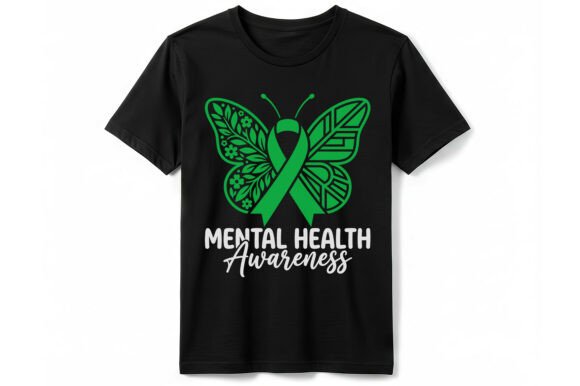
Reviewing the Mental Health Butterfly T-shirt Design
As a designer who has spent countless hours digitizing and testing patterns for everything from boutique apparel to high-volume craft fair merchandise, I approach every new machine embroidery design with a critical eye. It is not enough for a graphic to look good on a screen; it must translate flawlessly into thread. Recently, I evaluated the Mental Health Butterfly T-shirt design, a piece that sits at the intersection of meaningful advocacy and aesthetic appeal. This review breaks down how this specific graphic performs in real-world embroidery scenarios, offering practical insights for Etsy sellers, small shop owners, and hobbyists looking to elevate their product offerings.
First Impressions: Mood and Visual Personality
The immediate impact of the Mental Health Butterfly T-shirt design is one of gentle resilience. The integration of the green awareness ribbon into the wings of a butterfly is a clever visual metaphor that avoids being overly clinical or heavy. For embroidery designers, the layout presents an interesting challenge and opportunity. The curves of the butterfly wings suggest a flow that works well with satin stitches, while the ribbon element requires precise tension to maintain its symbolic shape without puckering.
The mood created is calm and supportive, making it an ideal candidate for products intended to comfort or empower. When I first loaded the embroidery file into my simulation software, I looked closely at the transition points between color blocks. The design does not rely on excessive density, which is a positive sign for wearability. However, the artistic nature of the green ribbon motif means that thread color selection will play a pivotal role in the final outcome. A muted sage green might convey subtlety, while a vibrant emerald could make a bolder statement, depending on your target audience.
Real-World Application: From Screen to Stitch
To truly understand the value of this design, I simulated its application on several common substrates. The most natural fit is, unsurprisingly, custom apparel. On a standard cotton t-shirt, the design sits comfortably on the left chest or as a larger back piece. The T-Shirt Designs category is saturated, but items with a cause-driven narrative often outperform generic graphics because they connect emotionally with the buyer.
Beyond tees, I envisioned this pattern on a canvas tote bag. Here, the tote bag design potential shines because the sturdy fabric supports the stitch structure without requiring heavy stabilizer intervention. The butterfly’s wingspan allows for a striking central placement that draws the eye. For those running a craft business, consider using this on sweatshirts. Sweatshirt embroidery benefits from designs that are not too dense, preventing the garment from becoming stiff or uncomfortable. The Mental Health Butterfly T-shirt design appears to have a balanced stitch count that would lay flat on fleece or French terry fabrics.
I also considered its use in baby embroidery projects, such as a soft onesie or a nursery blanket. While the theme is universal, the delicate lines of the butterfly wings would need careful testing on thinner knits. If the stitch density is too high for infant skin, reducing the underlay or opting for a lighter weight thread could make it viable. For holiday embroidery or mental health awareness months, this design serves as a respectful and stylish option for personalized gifts that do not feel like mere merchandise.
Navigating Technical Challenges
No design is without its pitfalls, and experienced makers know where to exercise caution. With the Mental Health Butterfly T-shirt graphic, the primary concern lies in the finer details of the ribbon integration. If you are working with a small hoop size, such as a 4x4 inch frame, you may lose the nuance of the ribbon’s curve. In such cases, scaling up or choosing a larger hoop is advisable to preserve the design’s integrity.
Textured fabrics present another variable. On a waffle-knit or heavily textured linen, the satin stitch elements might sink into the fabric pile, obscuring the definition. I recommend using a cutaway stabilizer for stretchy fabrics and a tear-away for woven materials to ensure the finished product remains crisp after washing. Dark fabrics require special attention to thread contrast. If the green ribbon is stitched on a black shirt, ensure you are using a high-sheen rayon or polyester thread that catches the light, or consider adding a subtle white underlay to boost visibility.
Curved surfaces, such as caps or hats, demand a different approach. While this design is labeled under Graphics for t-shirts, adapting it for headwear requires checking the width. If the butterfly spans too wide, it will distort over the crown’s curve. In such instances, splitting the design or reducing the scale significantly is necessary. Always test on scrap fabric first. This step is non-negotiable for professional results. Check how the thread colors interact with your specific machine’s tension settings before committing to a customer’s garment.
Enhancing Brand Value and Customer Trust
For Etsy sellers and creative entrepreneurs, the choice of design directly influences brand perception. Using a well-executed Mental Health Butterfly T-shirt design signals that you care about both aesthetics and message. It adds depth to your small shop product lineup, moving beyond simple decoration to meaningful expression. Customers are increasingly drawn to handmade items that tell a story, and this design facilitates that connection.
When creating printable mockup images for your online store, ensure the digital representation matches the stitched reality. Misleading previews can lead to returns and negative reviews. Highlight the texture of the stitches in your photos to emphasize the quality of your handmade product. This transparency builds trust and justifies premium pricing. Furthermore, consistent use of such thoughtful design assets helps establish a cohesive brand identity centered on care and creativity.
Practical Notes for the Embroidery Designer
Before launching this design in your commercial embroidery workflow, take these practical steps. First, verify the licensing terms. Ensure that the digital embroidery file permits commercial use if you plan to sell finished items. Second, inspect the applique design elements if any are present, though this appears to be a standard fill and satin combination. Confirm whether the design uses fill stitch or running stitch for outlines, as this affects production time and thread consumption.
Test the design on both light and dark backgrounds to determine if you need separate color variations. A version optimized for dark fabrics might include a border or background fill to prevent the garment color from bleeding through the stitches. Finally, consider the end-user experience. Will the back of the embroidery feel scratchy? If so, recommend a soft backing or use a covering stitch for items like embroidered patch applications or direct-to-garment stitching on sensitive skin areas.
In conclusion, the Mental Health Butterfly T-shirt design offers a compelling blend of symbolism and style. With careful attention to fabric choice, stabilizer selection, and thread contrast, it can become a standout item in your portfolio. Whether used for custom apparel, heartfelt gifts, or awareness campaigns, this design holds significant potential for those willing to invest the time in proper execution. By treating each stitch with intention, you transform a simple graphic into a lasting piece of wearable art.